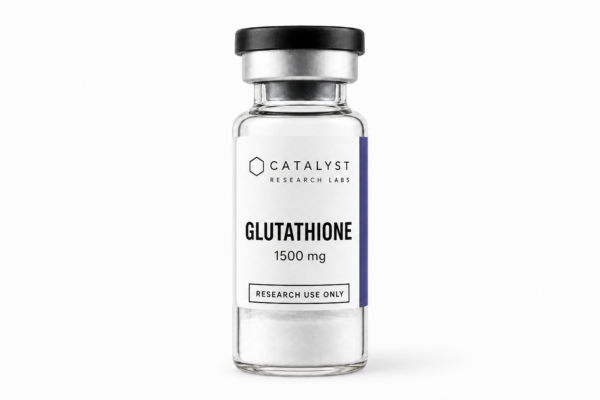
Glutathione
Master antioxidant researched for cellular protection.
Glutathione
Background
Glutathione is an endogenous tripeptide (gamma-glutamyl-cysteinyl-glycine) and the principal intracellular antioxidant. It participates in redox homeostasis, detoxification of reactive species and xenobiotics via glutathione-S-transferases, and regeneration of other antioxidants.
Its biochemistry is extensively documented; research questions center on cellular oxidative-stress defense and the bioavailability of exogenous glutathione across different routes.
Selected literature
- Forman HJ, Zhang H, Rinna A. Glutathione: overview of its protective roles, measurement, and biosynthesis. Molecular Aspects of Medicine. 2009;30(1-2):1-12.
- Pizzorno J. Glutathione! Integrative Medicine (Encinitas). 2014;13(1):8-12.
- Lushchak VI. Glutathione homeostasis and functions: potential targets for medical interventions. Journal of Amino Acids. 2012;2012:736837.
References are provided for scientific context only. Citation does not imply endorsement of any use, nor a claim of safety or efficacy. Findings frequently derive from in-vitro or animal models.
Trademarks & attribution
Glutathione is a naturally occurring endogenous tripeptide and is not a trademarked product. Supplied as reference material only.