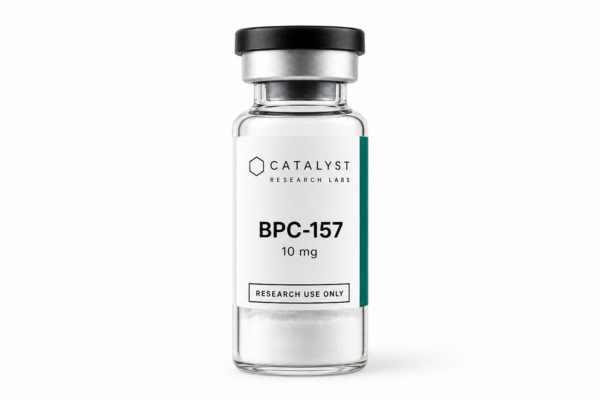
BPC-157
Pentadecapeptide researched for soft-tissue, tendon, and gut-lining repair.
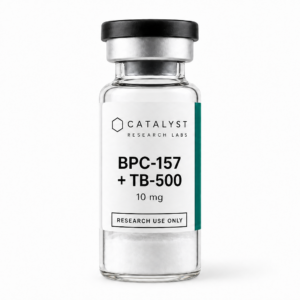
BPC-157
Background
BPC-157 (Body Protection Compound-157) is a synthetic pentadecapeptide comprising 15 amino acids, derived from a partial sequence of a protective protein identified in human gastric juice. In preclinical models it has been studied for its influence on angiogenesis, the upregulation of growth-factor receptors (notably VEGFR2), and modulation of the nitric-oxide system, mechanisms proposed to underlie observed effects on tendon, ligament, muscle, and gastrointestinal tissue.
A substantial body of rodent literature, largely from the laboratory of Sikiric and colleagues, reports accelerated healing of transected tendons, muscle, and intestinal anastomoses, alongside a proposed brain-gut axis interaction. These findings are confined to in-vitro and animal systems; controlled human clinical data are limited.
Selected literature
- Sikiric P, et al. Brain-gut axis and pentadecapeptide BPC 157. Current Neuropharmacology. 2016;14(8):857-865.
- Chang CH, Tsai WC, et al. The promoting effect of pentadecapeptide BPC 157 on tendon healing. Journal of Applied Physiology. 2011;110(3):774-780.
- Gwyer D, Wragg NM, Wilson SL. Gastric pentadecapeptide BPC 157 and its role in accelerating musculoskeletal soft tissue healing. Cell and Tissue Research. 2019;377(2):153-159.
- Seiwerth S, et al. BPC 157 and standard angiogenic growth factors. Current Pharmaceutical Design. 2018;24(18):1972-1989.
References are provided for scientific context only. Citation does not imply endorsement of any use, nor a claim of safety or efficacy. Findings frequently derive from in-vitro or animal models.
Trademarks & attribution
BPC-157 is an investigational pentadecapeptide with no approved drug product or registered pharmaceutical trademark. Catalyst Research Labs is not affiliated with, endorsed by, or sponsored by any pharmaceutical manufacturer. Supplied as reference material only.