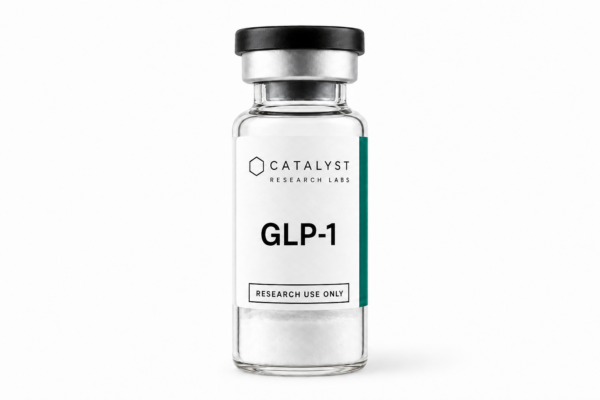
GLP-1
The foundational incretin compound for metabolic research.
GLP-1
Background
Glucagon-like peptide-1 (GLP-1) is an endogenous incretin hormone secreted by intestinal L-cells in response to nutrient intake. Acting through the GLP-1 receptor, it potentiates glucose-dependent insulin secretion, suppresses glucagon, slows gastric emptying, and promotes satiety, making it a foundational target in metabolic research.
The biology of GLP-1 underpins an entire class of approved receptor agonists; the native peptide is rapidly degraded by DPP-4, which motivated the development of stabilized analogs.
Selected literature
- Drucker DJ. Mechanisms of action and therapeutic application of glucagon-like peptide-1. Cell Metabolism. 2018;27(4):740-756.
- Nauck MA, Meier JJ. Incretin hormones: their role in health and disease. Diabetes, Obesity and Metabolism. 2018;20(S1):5-21.
- Wilding JPH, et al. Once-weekly semaglutide in adults with overweight or obesity (STEP 1). New England Journal of Medicine. 2021;384(11):989-1002.
References are provided for scientific context only. Citation does not imply endorsement of any use, nor a claim of safety or efficacy. Findings frequently derive from in-vitro or animal models.
Trademarks & attribution
GLP-1 is an endogenous incretin hormone. Pharmaceutical GLP-1 receptor agonists include semaglutide (Ozempic(R), Wegovy(R), Rybelsus(R); Novo Nordisk) and liraglutide (Victoza(R), Saxenda(R); Novo Nordisk). Those trademarks belong to their owners. Catalyst Research Labs is not affiliated with Novo Nordisk. Supplied as reference material only.