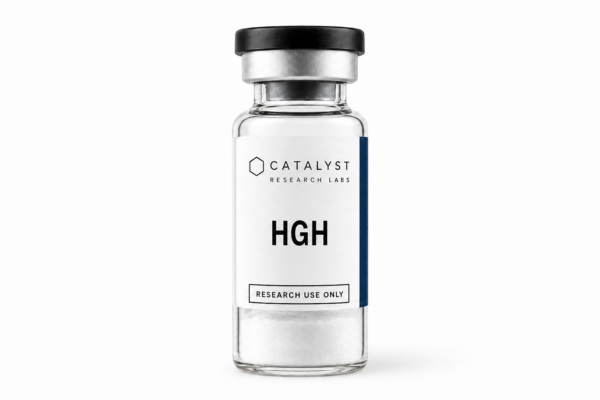
HGH
Recombinant human growth hormone for research.
HGH
Background
Recombinant human growth hormone (somatropin) is a 191-amino-acid polypeptide identical in sequence to pituitary-derived growth hormone. It acts via the growth-hormone receptor and the downstream IGF-1 axis to influence linear growth, protein synthesis, lipolysis, and carbohydrate metabolism.
Somatropin is among the most thoroughly studied peptide hormones, with established clinical use in defined deficiency states and a correspondingly large body of endocrinology literature.
Selected literature
- Molitch ME, et al. Evaluation and treatment of adult growth hormone deficiency: an Endocrine Society clinical practice guideline. Journal of Clinical Endocrinology and Metabolism. 2011;96(6):1587-1609.
- Ranke MB, Wit JM. Growth hormone - past, present and future. Nature Reviews Endocrinology. 2018;14(5):285-300.
- Liu H, et al. Systematic review: the safety and efficacy of growth hormone in the healthy elderly. Annals of Internal Medicine. 2007;146(2):104-115.
References are provided for scientific context only. Citation does not imply endorsement of any use, nor a claim of safety or efficacy. Findings frequently derive from in-vitro or animal models.
Trademarks & attribution
Somatropin (recombinant human growth hormone) is marketed under brands including Genotropin(R) (Pfizer), Humatrope(R) (Eli Lilly), Norditropin(R) (Novo Nordisk), and Omnitrope(R) (Sandoz). Those trademarks belong to their respective owners. Catalyst Research Labs is not affiliated with any of them. Supplied as reference material only.